
The beautiful sound of the xylophone was enjoyed by all during the Taroko Tribal Music Festival on March 28
|
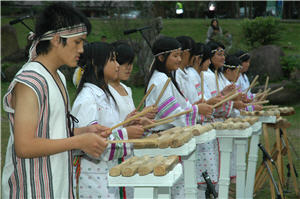
The beautiful sound of the xylophone was enjoyed by all during the Taroko Tribal Music Festival on March 28
In the past, every aspect of the daily lives of the mountain-dwelling people of the Taroko tribe depended on the mountains around them. As for music, the people have god-given singing voices and their traditional instruments are all made from natural materials. The xylophone is the Taroko’s most important percussion instrument. From 3pm to 3.50pm on March 28, Taroko Terrace was the venue for the Taroko Tribal Music Festival. The audience enjoyed the clear and melodious sounds of the xylophone ringing out across the gorge and also had a chance to experience the fun of playing a xylophone.
The Taroko xylophone comprises of four narrow rectangular pieces of wood, each a different length. Each piece has a single scale meaning and single xylophone has only four scales—Re,Mi.Sol,La. Each performer plays two xylophones, making beautiful music. Xylophones are made from wood from the China Sumac (Rhus chinensisMill.). After the tree is chopped the wood has to be matured in a dark dry place for three months before it is used to make a xylophone. The wood is soft so after it is dried it produces a loud, sharp and clear sound when it is hit. A number of xylophones played together produces music that has a rapid rhythm and is multi-layered. The Taroko people traditionally use xylophones to call their relatives and friends for a feast. Xylophones are played during happy occasions, like weddings and festivals, to liven up the atmosphere.
Before the performances began, Pastor Hayu Yudau used a Taroko ceremony to bless the audience. Then, together with his son, Ha-Yu A-Wei (阿威•哈尤), he performed a mouth organ and four-stringed ubug spat qnawal (a traditional instrument like a four-stringed ukulele) duet and, after this, people from Tongli village sang choruses including “The Sound of Mysterious Valley’ and “Date on Rainbow Bridge” and then performed “Hero”, Welcome:” and “Harvest Festival” dances, dancing together with members of the audience, giving them an experience of indigenous people’s song and dance.
“Taroko Cultural Market” was held on the same day as the festival. From 10 am to 4 pm the staff of workshops from local villages gathered together on Taroko Terrace to sell their handicrafts and foods. The concert plus the market allowed visitors to enjoy a fun-for-all-the-family day and, moreover, become acquainted with the culture of the Taroko people.
News issued by: Taroko National Park Headquarters
Translated by: Kevin Lax