
Dongsha Atoll National Park’s Starry Sky Underwater – Wonder of Coral Spawning
DuringMarch and April of the Lunar Calendar, Dongsha Atoll’s corals will conduct theiryearly reproductive activity. Corals will collectively spawn and hence theocean’s surface will be dyed red due to the massive release of gametes.
When corals spawn, theyrelease large amounts of granular objects; most are “gametes”. Gametes aregranular objects that contain multiple eggs and spermatophores. Every coral canrelease large amounts of gametes. It releases almost a whole year’s worth ofenergy in a short few minutes and this is the main reason it is so difficult tosee corals spawn. When multiple corals spawn at the same time, it creates aspectacular sight. The large amounts of gametes float to the ocean’s surfaceand separate, finding other gametes to fuse with. After the gametes fuse, theywill start to develop and become a larva that floats. Going with the flow ofthe water, they will spread and, within a number of days, sink. They willattach themselves to the proper sediment and grow into new coral, starting anew journey in life.
Inorder to observe and record Dongsha Atoll Coral’s spawning situation, personnelfrom the Marine National Park Headquarters rely on the past spawning periods,water temperature and tides to infer and predict the range of the upcomingcoral spawning period. They then collect parts of coral slices and use amicroscope to observe and verify the development of the gonads. During the predicted spawning period, it willsend personnel to patrol the oceans daily with a lamp in order not to miss outon observing and researching the special ecological behavior of coral spawning.After a weeklong nightly patrol, finally on the night of April 26th, an imagewas recorded of astraeid’s massive spawning. It has been predicted that thecycle for this wave of coral spawning will last around a month.
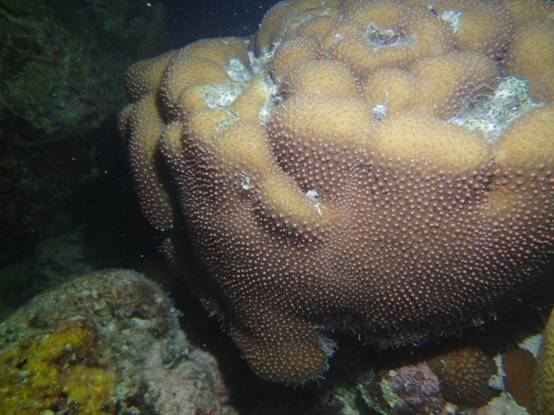 |
| Coral spawning (budding) |
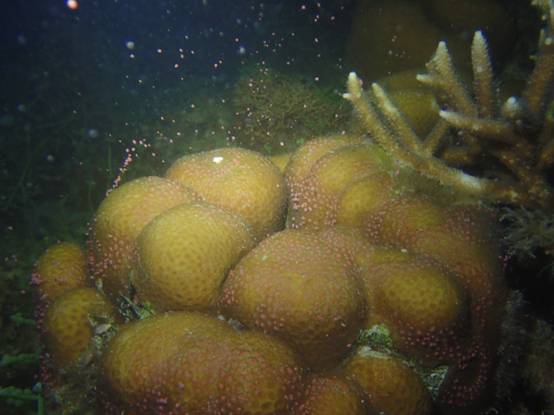 |
| Coral spawning (dividing) |